Mount Rinjani Trekking: The Ultimate Guide to Lombok’s Majestic Volcano
Mount Rinjani Trekking is a dream adventure for hikers worldwide. This active volcano stands proudly at 3,726 meters above sea level on Lombok Island. It is the second-highest volcano in Indonesia. The journey offers some of the most dramatic landscapes in Southeast Asia.
Are you planning to conquer this majestic peak? This guide covers everything from route comparisons to essential preparation tips.

What to Expect During Mount Rinjani Trekking
Hiking Mount Rinjani is both mentally challenging and visually spectacular. Here is what awaits you on the trail:
- Diverse Ecosystems: You will walk through lush tropical rainforests, wide golden savannahs, and steep volcanic scree slopes.
- Breathtaking Campsites: Sleep above the clouds at the crater rims. Enjoy stunning sunsets and clear night skies filled with stars.
- The Segara Anak Crater Lake: A magnificent crescent-shaped lake inside the caldera, featuring a natural hot spring nearby.
- An Epic Sunrise: Watch the sun rise from the highest peak, offering views of Mount Agung in Bali and Mount Tambora in Sumbawa.
Who Is Mount Rinjani Trekking For?
This mountain adventure is a highly rewarding experience. It is ideal for:
- Adventure Enthusiasts: Anyone who loves raw nature and outdoor camping.
- Fit Travelers: Hikers with good stamina who enjoy challenging physical activities.
- Landscape Photographers: People looking to capture world-class mountain panoramas.
⚠️ Who Should Avoid Mount Rinjani Trekking?
Mount Rinjani is a serious mountain with extreme terrain. It is not recommended for:
- Young Children: Kids under the age of 7 years old.
- People with Health Issues: Anyone suffering from severe asthma, heart conditions, or chronic knee injuries.
- People Experiencing Vertigo: The trails feature steep ridges with deep drop-offs on both sides.
Route Comparison Mount Rinjani Trekking: Sembalun vs. Senaru
| Feature | Sembalun Route | Senaru Route |
|---|---|---|
| Primary Landscape | Open savannah plains | Shaded tropical rainforest |
| Best Used For | Reaching the 3,726m Summit quickly | Viewing the Crater Lake and sunset |
| Sun Exposure | Very high and hot during the day | Low, mostly cool and shaded |
| Difficulty Level | Hard (Steep volcanic sand near the top) | Moderate to Hard (Long, steep forest roots) |
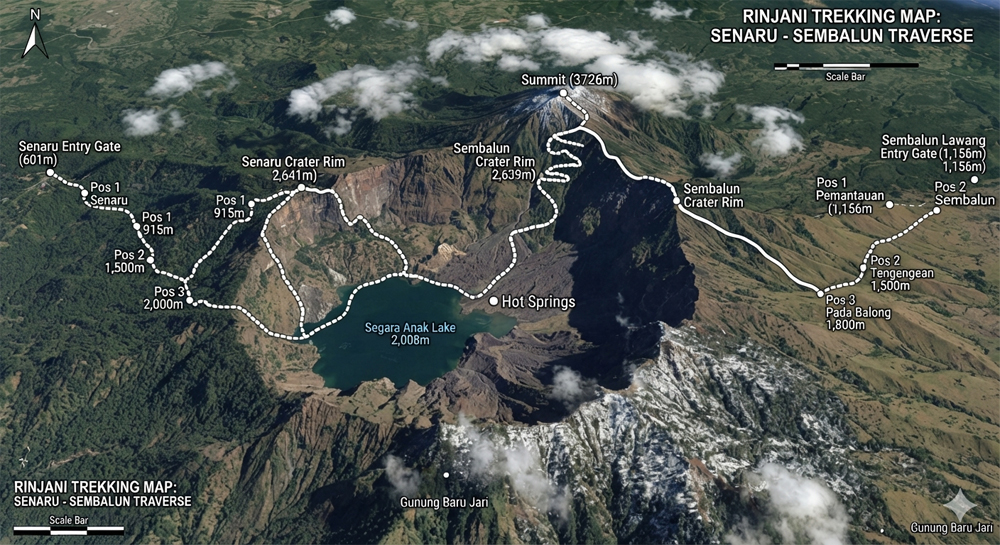
Sample Itineraries for Mount Rinjani Trekking.
Option 1: The 2D1N Sembalun Summit Express
This package focuses entirely on reaching the highest peak in the shortest time.
Day 1: Sembalun Village to Crater Rim
Register at the Sembalun office. Hike through the open savannah to Position 3. Climb the steep “Hills of Regret” to camp at Sembalun Crater Rim. Watch the sunset.
Day 2: Summit Push and Return
Wake up at 2:00 AM. Climb the loose volcanic gravel to the 3,726m summit for sunrise. Hike back down to the camp for breakfast. Descend all the way back to Sembalun Village.
Option 2: The 2D1N Senaru Crater Rim Leisure Tour
This package skips the summit and focuses on beautiful lake views and forest shade.
Day 1: Senaru Village to Senaru Crater Rim
Walk through the cool tropical rainforest. Stop at various positions for breaks. Reach the Senaru Crater Rim by late afternoon. Enjoy the spectacular view of Segara Anak Lake below.
Day 2: Descent Back to Senaru
Wake up to a beautiful sunrise over the caldera. Enjoy a hot breakfast prepared by porters. Hike back down through the shaded forest to Senaru Village.
Eco-Friendly Hiking Guidelines (Leave No Trace)
Mount Rinjani is a protected National Park. We must protect its unique ecosystem. Please follow these eco-friendly rules during your trek:
- Pack It In, Pack It Out: Bring all your trash back down the mountain. Never leave plastic wrappers or wet wipes on the trail.
- Use Designated Toilets: Your trekking organizer will set up a private toilet tent at the campsite. Do not leave waste near water sources.
- Respect the Wildlife: Do not feed the wild monkeys at the crater rims. Human food can make them aggressive and unhealthy.
- Do Not Take Souvenirs: Leave the rocks, plants, and volcanic stones exactly where you find them.
What to Prepare Before Mount Rinjani Trekking
Proper preparation ensures your safety and comfort on the active volcano.
1. Physical Training
Start your training at least one month before the trek. Focus on cardio workouts. Jogging, swimming, and stair climbing are excellent options. These exercises strengthen your legs and lungs for the steep elevation changes.
2. Mandatory Gear Checklist
Temperatures at the crater rims can drop to 5°C (41°F) at night. You must use a layering system to stay warm.
- Sturdy trekking shoes with deep traction patterns.
- A warm windproof and waterproof jacket.
- A bright headlamp with spare batteries for the night climb.
- Trekking poles to help balance on loose volcanic sand.
- Warm gloves, a beanie, a dust mask, and personal medication.
3. Legal and Booking Requirements
- Official Tickets: Book your trip through a Nayaka to secure your e-Rinjani park tickets early. Daily visitor quotas are strictly enforced.
- Health Certificate: You must bring a medical check-up letter from a clinic to clear the mandatory health screening before hiking.
❓ Frequently Asked Questions (FAQs)
How much weight do mountain porters carry?
Porters carry between 20 to 25 kilograms of load. They carry the heavy tents, sleeping bags, cooking utensils, and fresh ingredients. You only need to carry your own small daypack.
Is there a luggage storage service for my extra bags?
Yes. Most trekking organizers provide secure storage at their base camps in Sembalun or Senaru. You can leave your large travel suitcases there for free until you return.
Should I tip the mountain guide and porters?
Tipping is highly appreciated but not mandatory. It shows gratitude for their hard work. A standard tip ranges from IDR 100,000 to IDR 200,000 per porter/guide from the whole group.